
Coffee Defects Explained: What Lowers a Coffee’s Grade?
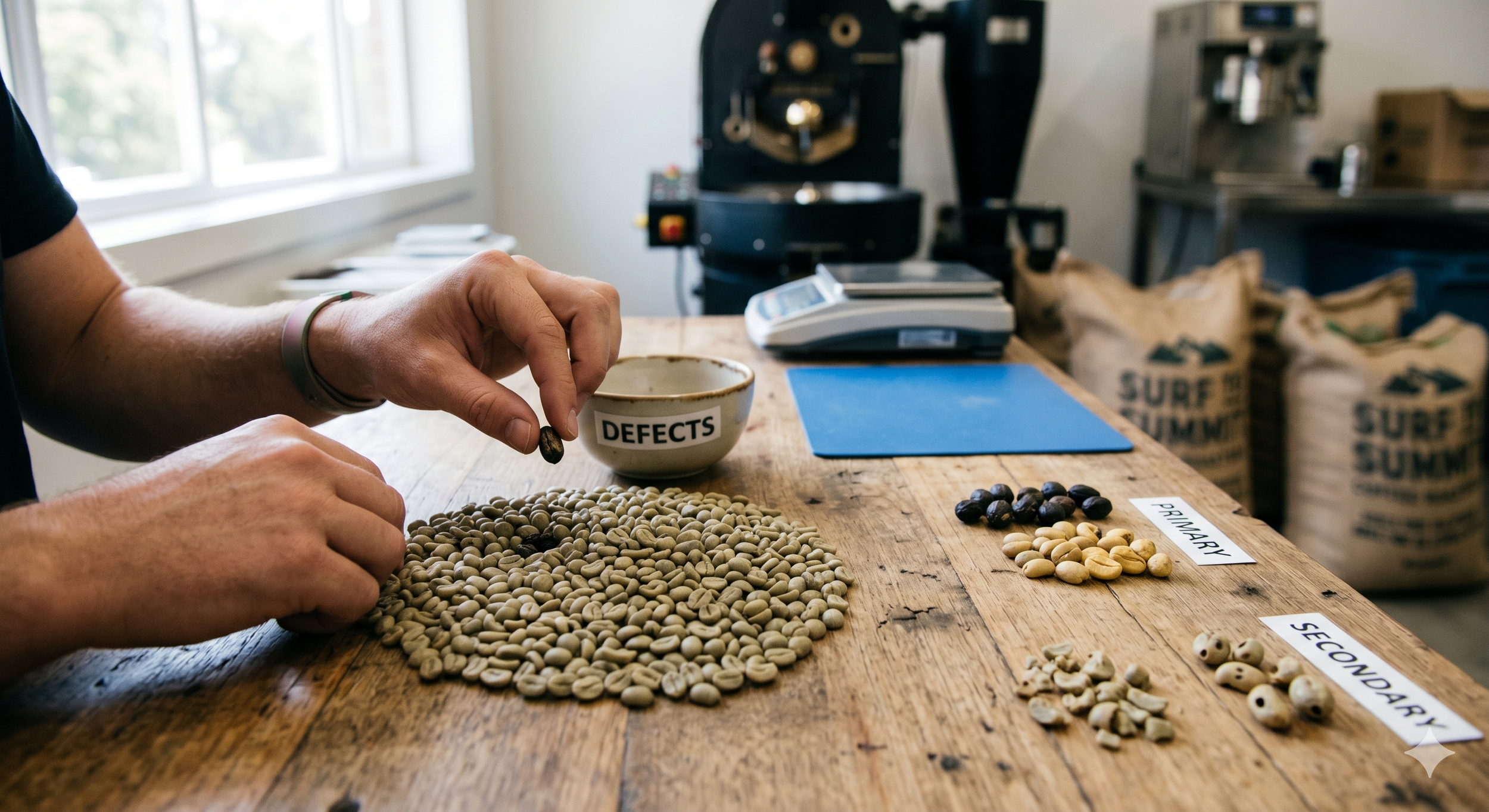
When you pour a cup of specialty coffee, you expect clarity, vibrant acidity, and distinct tasting notes, whether that is a bright Ethiopian yuzu or a rich, chocolatey Guatemalan. But long before those beans ever reach our roaster at Surf to Summit, they have to pass a rigorous inspection.
In the specialty coffee world, perfection is not just a goal; it is a measurable metric. The biggest threat to a coffee's reputation is a category simply known as defects. Here is a deep dive into what coffee defects are, how they alter your morning brew, and why they dictate whether a coffee qualifies as "specialty grade."
What Are Coffee Defects?
The Short Answer: Coffee defects are physical or sensory flaws in green, unroasted coffee beans that negatively affect cup flavor and commercial grading. Excessive defects alter the taste profile and prevent a coffee lot from qualifying as specialty grade under the strict 80-point industry threshold.
To be classified as "specialty," a coffee must score 80 points or higher on a 100-point scale by certified Q-Graders, who act as the sommeliers of the coffee world. Physical defects discovered during green coffee grading directly penalize this final score.
What Are Primary Defects? (Category 1)
Primary defects are severe, uncompromisabel flaws. They drastically degrade the cup quality, often introducing foul, sour, or rancid flavors. In specialty coffee, zero primary defects are allowed in a 350-gram sample.
Here are the most common culprits:
Full Black Beans: Typically caused by water deprivation, nutritional deficiencies, or fungal diseases during growth. In the cup, black beans produce a heavy, ash-like, bitter, and phenolic flavor.
Full Sour or Fermented Beans: This happens when coffee cherries are over-ripe or left too long in fermentation tanks during processing. It introduces a sharp, vinegar-like, or rotting-fruit taste.
Severe Insect Damage: When pests like the coffee berry borer tunnel deep into the bean. This opens the door for mold and leads to a dirty, potato-like, or hollow cup flavor.
Foreign Material: Sticks, stones, nails, or strings that find their way into the coffee bags during drying and packing. While they do not always alter flavor, they can easily destroy a commercial roaster's grinding and roasting equipment.
Even a single primary defect can completely disqualify an entire lot from achieving specialty status.
What Are Secondary Defects? (Category 2)
Secondary defects are less severe physical abnormalities. While they still impact the consistency and quality of the final brew, they are tolerated in small quantities. A maximum of five secondary defects are permitted in a 350-gram specialty sample.
Common Secondary Defects & Impact
Defect TypeWhat It Looks LikeHow It Affects the CupBroken or Cut BeansChipped, cracked, or fragmented pieces, usually caused by mechanical hulling machines.These small pieces roast much faster than whole beans, leading to scorched, smoky, and bitter notes.Partial Insect DamageMinor punctures or superficial holes from pests (fewer than 3 holes per bean).Slight loss of flavor clarity and a mild increase in bitterness.Minor Discoloration (Immature/Bleached)Beans that look pale green, yellow, or withered due to early harvesting or improper drying.Results in a "grassy," astringent, or straw-like flavor lacking sweetness.
Why Defect Control Matters: From Farm to Summit
Defect reduction is a grueling, non-stop battle that begins at the farm level and continues through every stage of production:
The Harvest: Pickers must meticulously hand-select only perfectly ripe, red cherries, leaving under-ripe or diseased fruit on the branch.
Processing & Sorting: After pulping and drying, the beans undergo multiple rounds of sorting. Producers use screen sizers, density tables, optical color sorters, and intensive hand-sorting lines to pick out defective beans.
The Final Evaluation: Quality grading includes both physical evaluation (counting defects) and sensory evaluation (cupping).
This meticulous sorting ensures consistency. If a bag of coffee contains hidden defects, one morning your cup might taste like blueberries, and the next day it might taste like cardboard. Specialty sorting ensures that every single brew delivers the exact flavor profile promised on the bag.
The Industry Takeaway
The absence of primary defects and the strict limits placed on secondary defects are essential to qualifying as specialty coffee. Quality starts long before the roasting process ever begins.
At Surf to Summit Coffee Roasters, we partner exclusively with importers and producers who prioritize meticulous sorting standards. When you buy our coffee, you are not just buying fresh beans. You are buying the culmination of hundreds of hours of quality control dedicated to keeping defects out of your cup.